
Dense Pallet Racking Systems
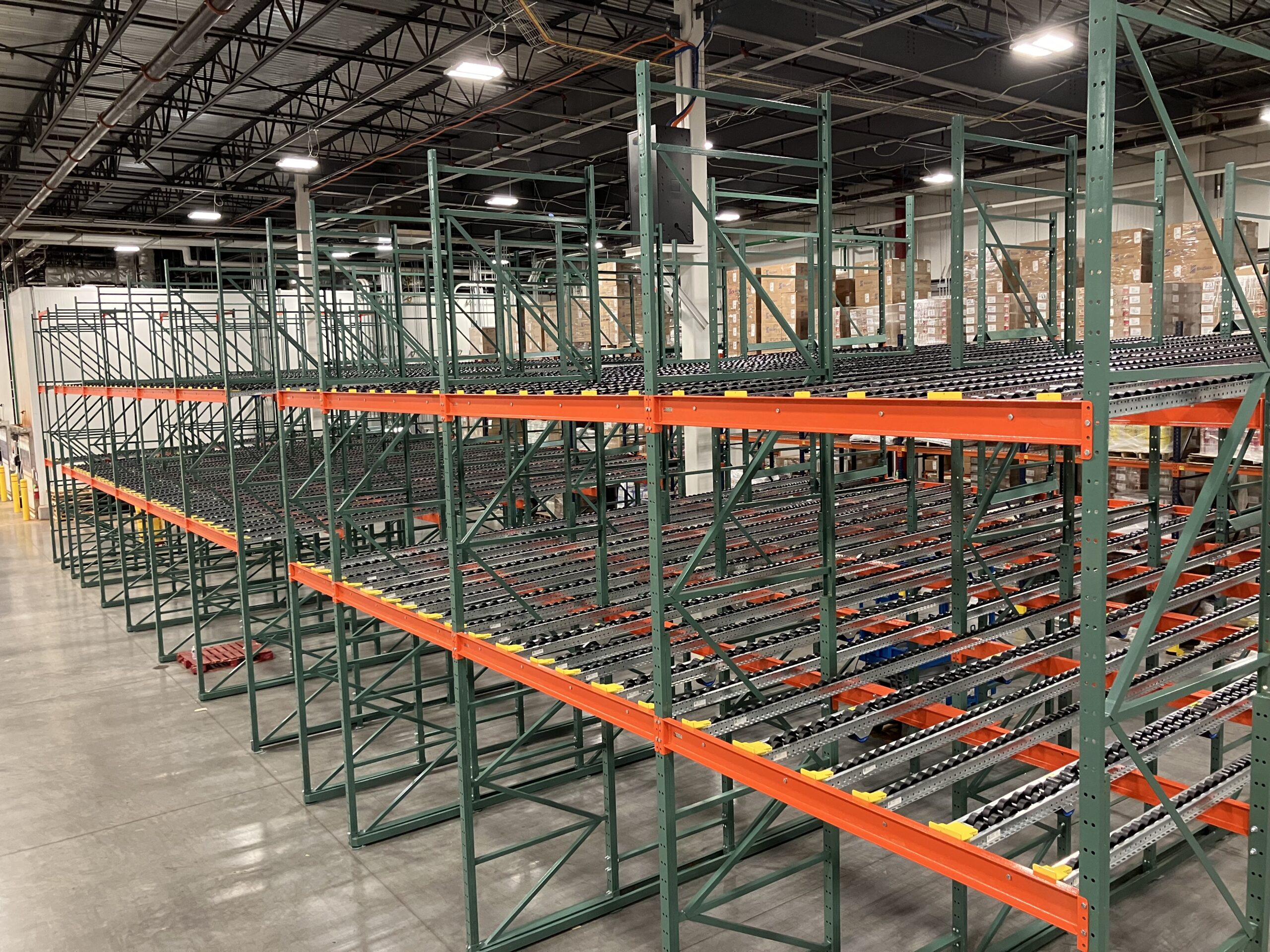
Maximize Warehouse Storage Capacity with Dense Pallet Racking Solutions
Dense pallet racking systems are designed to maximize warehouse storage capacity by reducing aisle space and allowing more pallets to be stored within the same footprint. These high-density storage solutions are ideal for businesses handling large quantities of similar products or looking to increase storage capacity without expanding their facility. At Prestige, we design and install dense pallet racking systems that help businesses optimize available space, improve inventory organization, and support efficient warehouse operations.
Whether you’re managing a manufacturing facility, distribution center, or cold storage warehouse, dense pallet racking provides a practical solution for making the most of your existing space.
What Is a Dense Pallet Rack System?
A dense pallet rack system is an industrial storage solution designed to maximize pallet capacity by storing products multiple positions deep while reducing the number of aisles required. Unlike selective pallet racking, which provides direct access to every pallet, dense racking prioritizes storage density to make better use of available warehouse space. These systems use upright frames, support rails, beams, and specialized storage mechanisms to accommodate pallets in deep storage lanes. Forklifts are then used to place and retrieve the pallets.
Depending on the configuration, pallets rest on support rails or move within the lane on gravity-fed rollers, carts, or automated shuttle systems. Common types include drive-in, drive-through, push-back, and pallet flow racking. Each system offers different advantages based on inventory rotation, pallet accessibility, and storage requirements.
Key Benefits of Dense Pallet Racking
Dense pallet racking systems efficiently increase storage capacity while making better use of available warehouse space. They’re designed for facilities where maximizing pallet storage, reducing aisle requirements, and managing bulk inventory are operational priorities.
- Maximize Storage Capacity: Store more pallets within your existing warehouse footprint by reducing the amount of floor space dedicated to aisles.
- Improve Space Utilization: Make better use of available floor space and vertical storage areas to increase overall storage efficiency.
- Reduce Expansion Costs: Increase pallet capacity without the immediate need for costly building expansions or additional warehouse space.
- Accommodate High-Volume Inventory: Efficiently store large quantities of similar products while keeping bulk inventory organized.
- Flexible Storage Configurations: Choose from drive-in, push-back, pallet flow, and other high-density systems based on your inventory and operational requirements.
Explore our industrial racking systems to discover different storage configurations and find the best solution for your facility.
Dense Racking Components
A dense pallet racking system is made up of several key components, each playing an important role in structural stability, load support, and efficient pallet storage. These components vary depending on the type of system and can be configured to match your facility’s layout, inventory demands, and storage requirements.
- Upright Frames: Braced steel frames that support the rack and establish its height and depth.
- Load Beams: Horizontal supports used in certain configurations to connect upright frames and support pallet loads.
- Pallet Support Rails: Support pallets stored multiple positions deep in drive-in and drive-through racking systems.
- Pallet Carts & Rollers: Push-back systems use carts or rollers to move pallets within a lane. Pallet flow systems use gravity-fed rollers.
- Bracing & Row Spacers: Bracing stiffens upright frames. Row spacers maintain the specified separation between adjacent rack rows where the design calls for them.
- Post Protectors & End-of-Aisle Guards: Help protect the racking system from forklift impacts and reduce the risk of equipment damage.
Our warehouse storage installation services help ensure racking systems are properly assembled, anchored, and aligned to meet operational requirements.
Types of Dense Pallet Racking Systems
Dense pallet racking systems are designed to increase storage capacity and improve warehouse space utilization. Each configuration supports different inventory management methods, storage requirements, and material handling operations. Explore the different types of dense pallet racking systems and how they work.
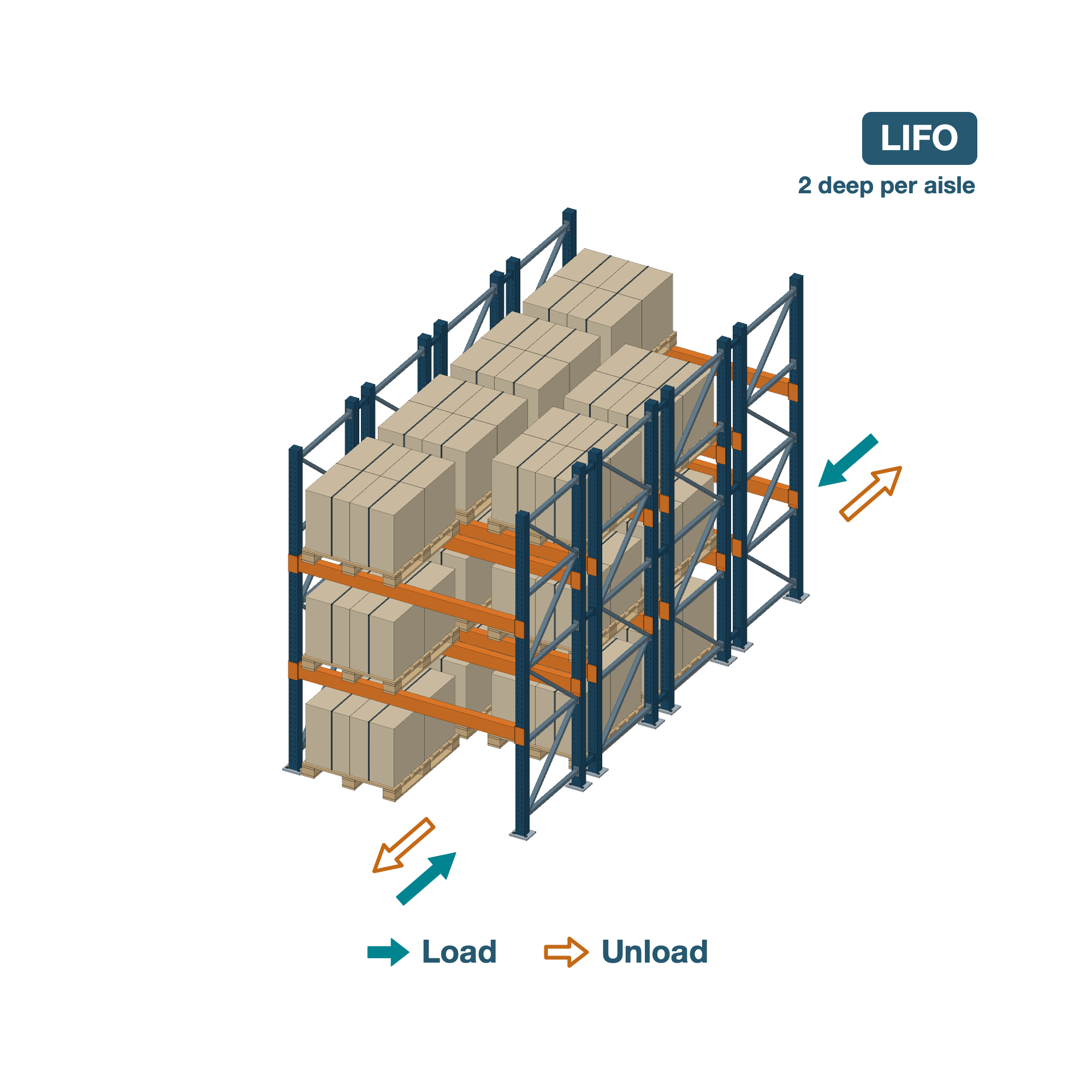
Double-Deep Pallet Racking
Double-deep pallet racking stores pallets two positions deep. A forklift equipped to reach the rear position can access it once the front pallet has been removed. This creates last-in, first-out (LIFO) rotation within each pair and works well for storing multiple pallets of the same product.
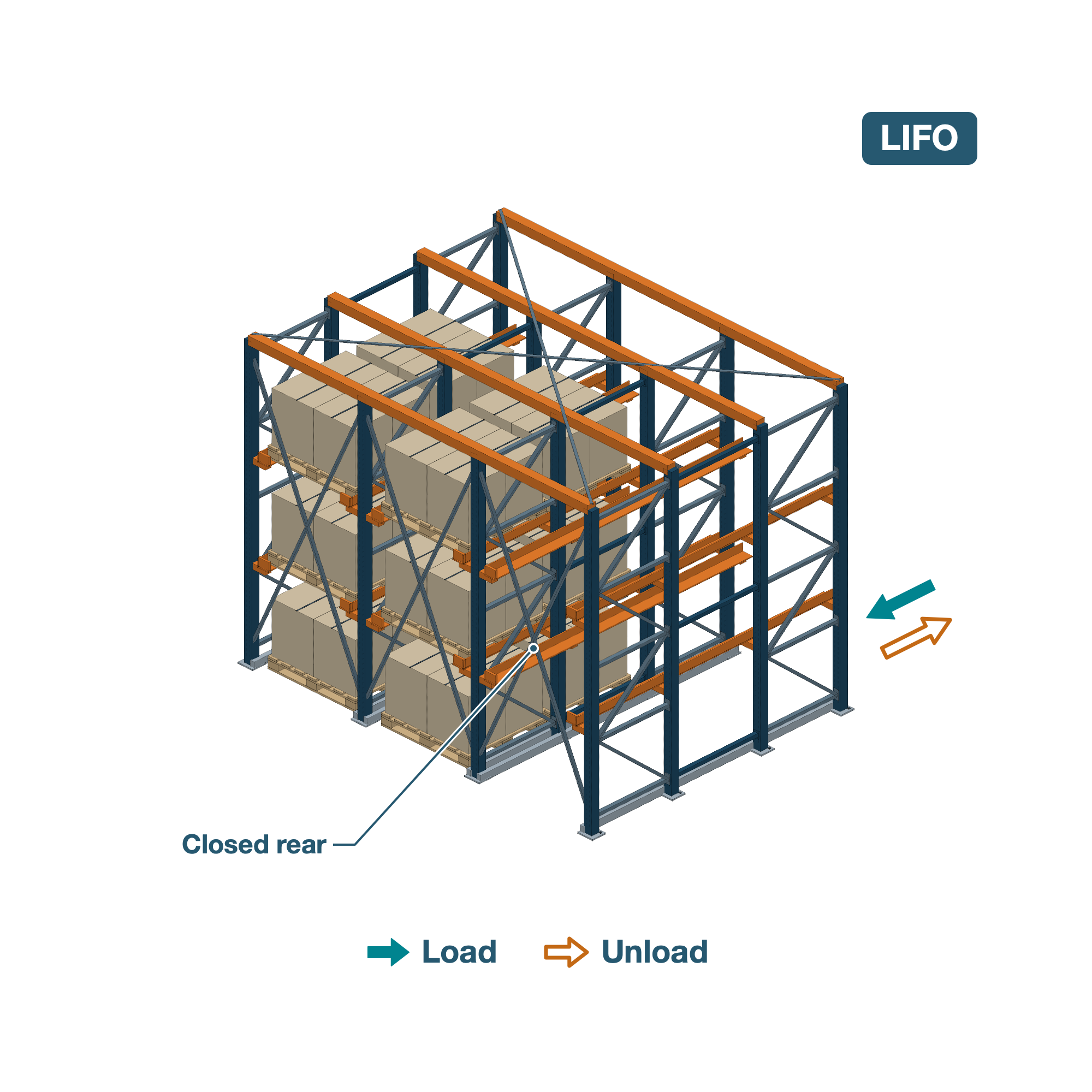
Drive-In Pallet Racking
Forklifts enter the storage lanes to load and retrieve pallets from the same side. Support rails hold pallets several positions deep within each lane. Drive-in pallet racking operates on a last-in, first-out (LIFO) basis and works well for storing large quantities of the same product when strict stock rotation isn’t required.
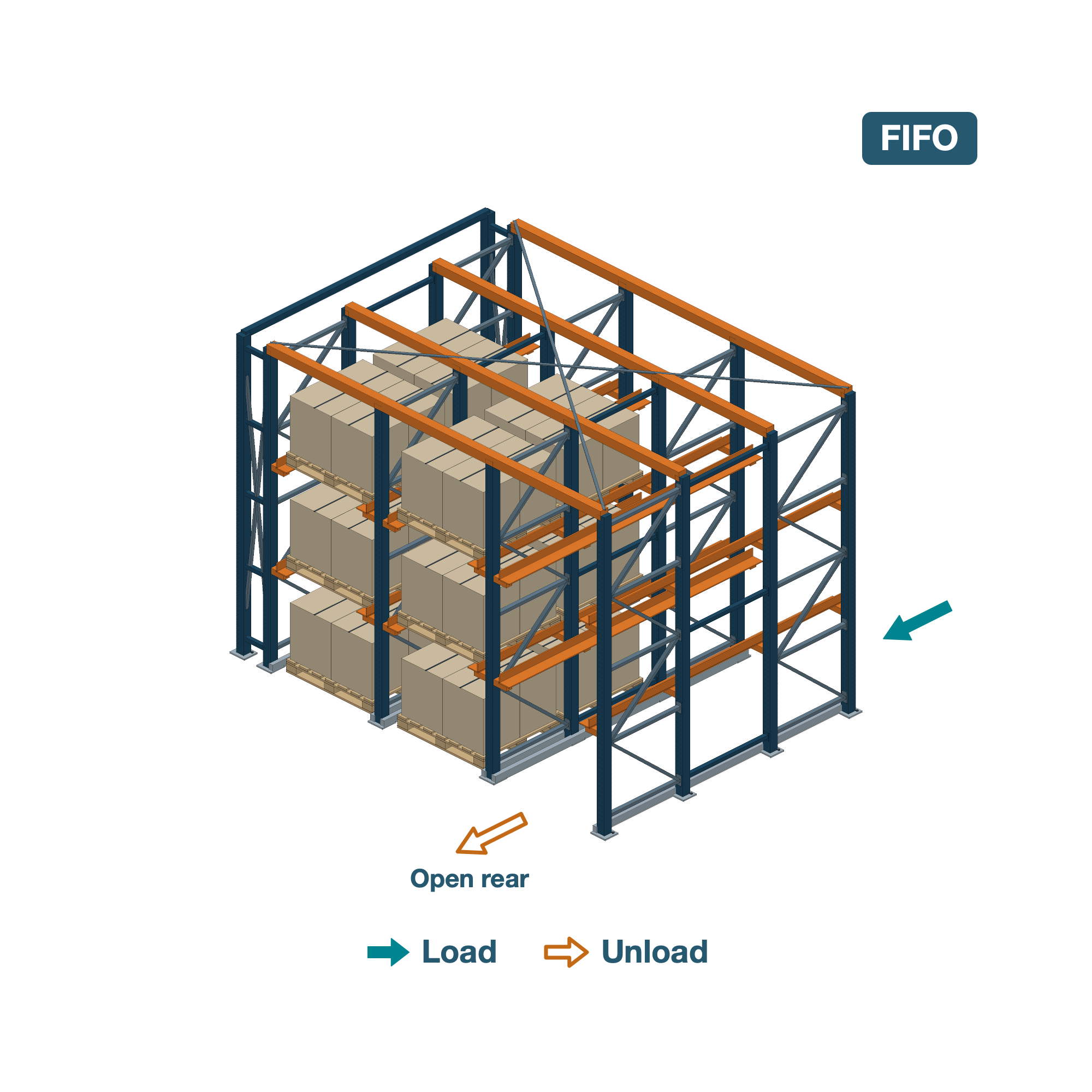
Drive-Through Pallet Racking
Forklifts load pallets from one end of the lane and retrieve them from the opposite end. Pallets rest on support rails several positions deep. This two-sided layout supports first-in, first-out (FIFO) rotation.
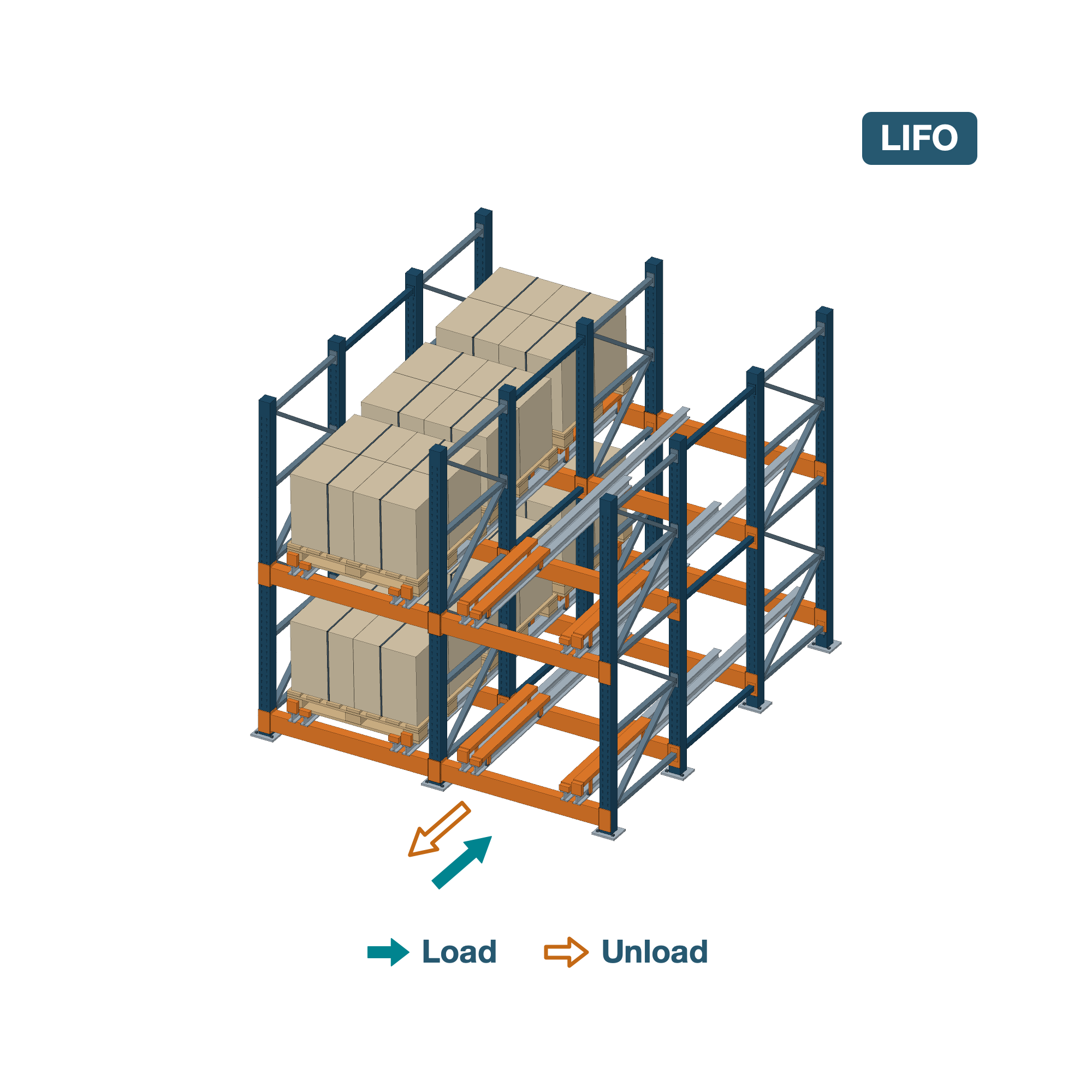
Push-Back Pallet Racking
Push-back pallet racking stores multiple pallets deep using carts on inclined rails or a roller system. A forklift loads and retrieves pallets from the same aisle. Each new pallet pushes the others back, and when the front pallet is removed, the remaining pallets roll forward. Each lane operates on a last-in, first-out (LIFO) basis.
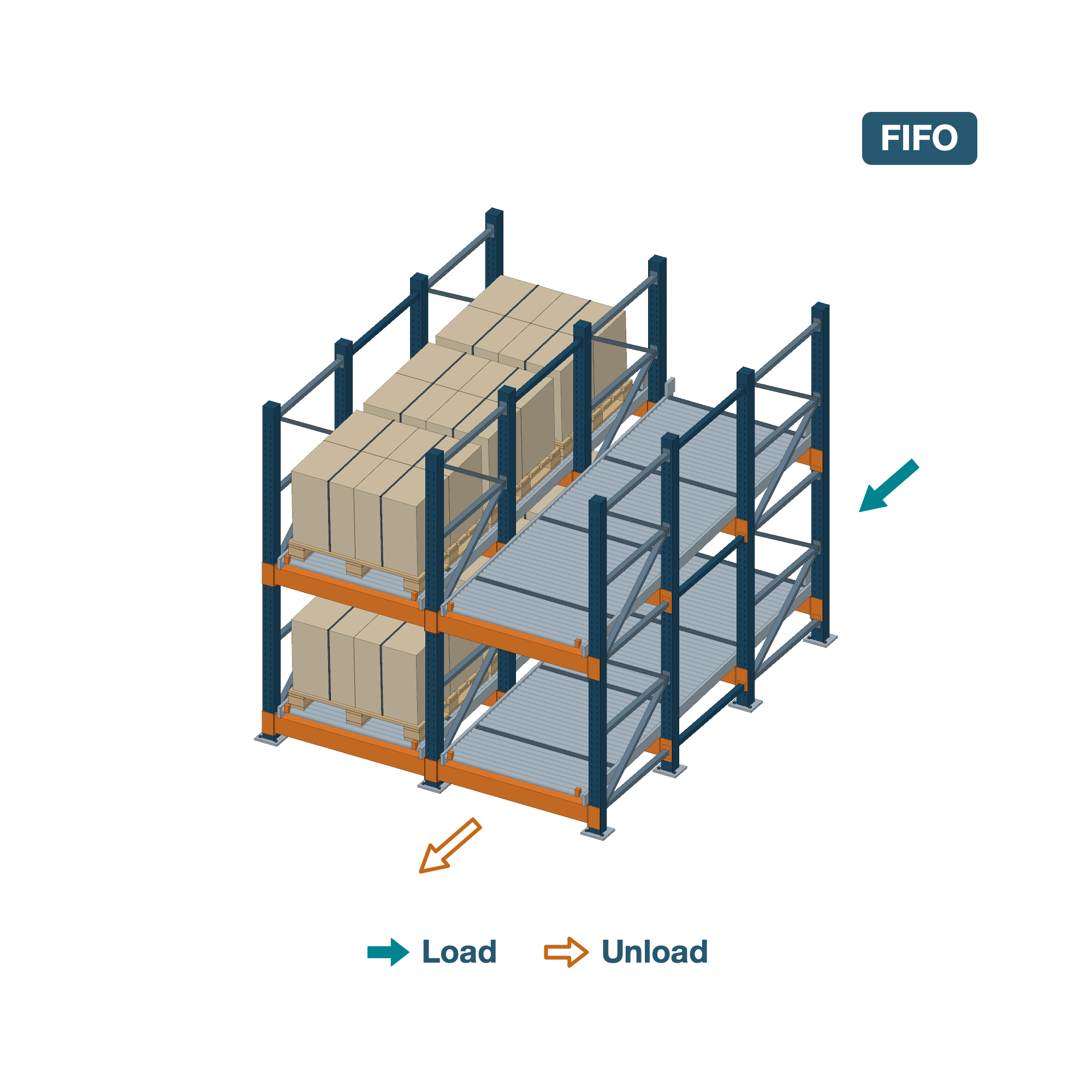
Pallet Flow Racking
Pallet flow racking uses inclined roller lanes to move pallets by gravity. Forklifts load pallets from one end and retrieve them from the opposite end. This layout supports first-in, first-out (FIFO) rotation for high-volume or perishable products.
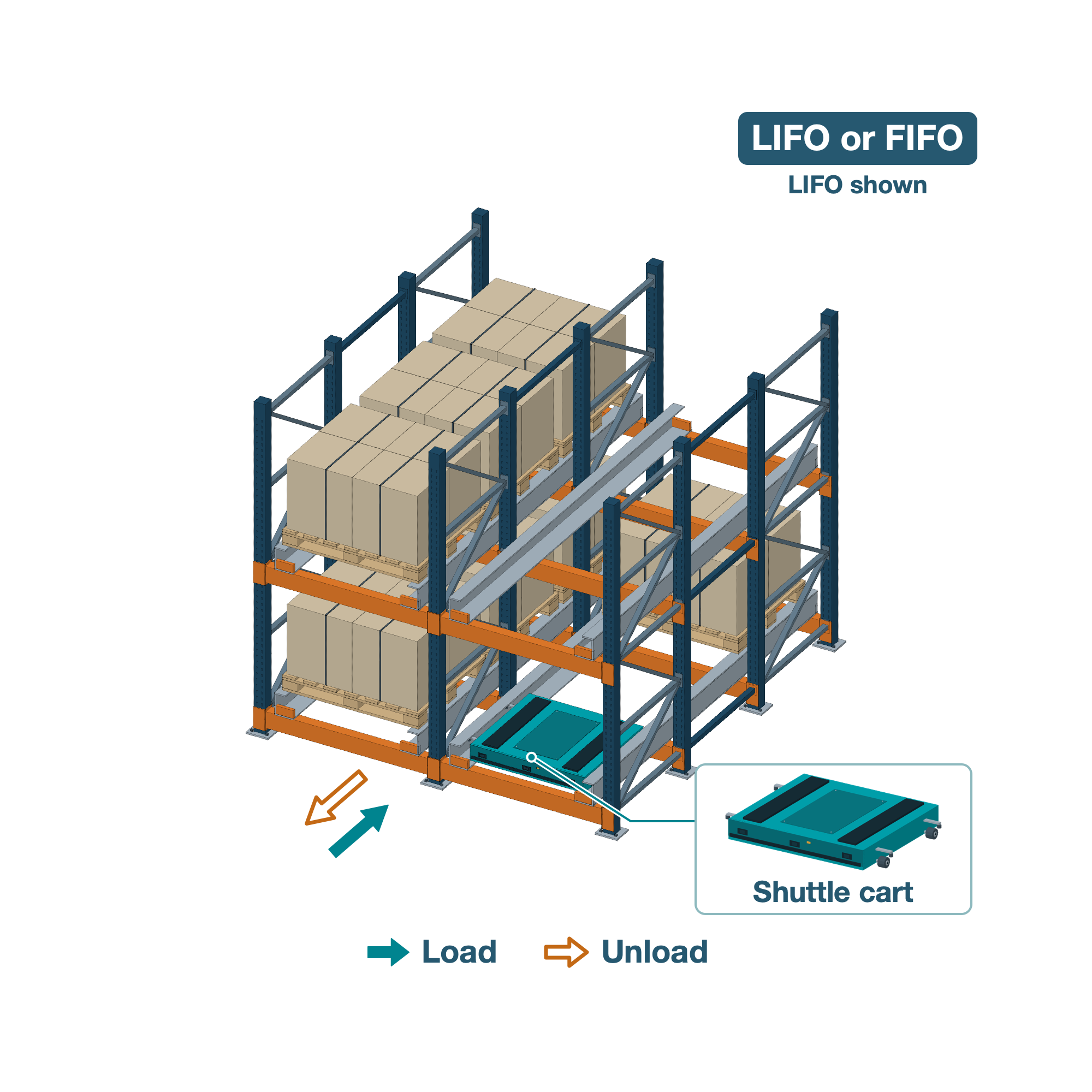
Pallet Shuttle System
A motorized shuttle moves pallets along rails inside deep storage lanes. In a forklift-served system, the forklift handles pallets at the lane opening. Pallet shuttle systems can support first-in, first-out (FIFO) or last-in, first-out (LIFO) rotation, depending on the configuration.
Not sure which system is best for your business? Contact us today for a free consultation.
When Dense Pallet Racking Is the Right Fit
Dense pallet racking is an ideal choice when maximizing storage capacity takes priority over direct access to every pallet. Unlike selective pallet racking systems, which provide immediate access to individual pallets, dense storage systems reduce aisle requirements and allow products to be stored multiple positions deep. This makes them particularly valuable for warehouses handling bulk inventory, limited SKU varieties, or operations looking to increase storage capacity within their existing facility.
- You need to maximize pallet storage capacity without expanding your warehouse.
- Your facility stores large quantities of similar products or a limited number of SKUs.
- Your operations prioritize storage density over immediate access to every pallet.
- You want to reduce the amount of floor space dedicated to forklift aisles.
- You need a storage solution that accommodates bulk inventory and specific FIFO or LIFO rotation requirements.
Could Selective Pallet Racking Be a Better Fit?
Dense pallet racking is ideal when maximizing storage capacity is the priority. However, if your warehouse manages a wide variety of SKUs or requires direct access to every pallet, selective pallet racking may be a better option. Our team can help you evaluate which system best fits your operation.
Why Choose Prestige for Your Racking System?
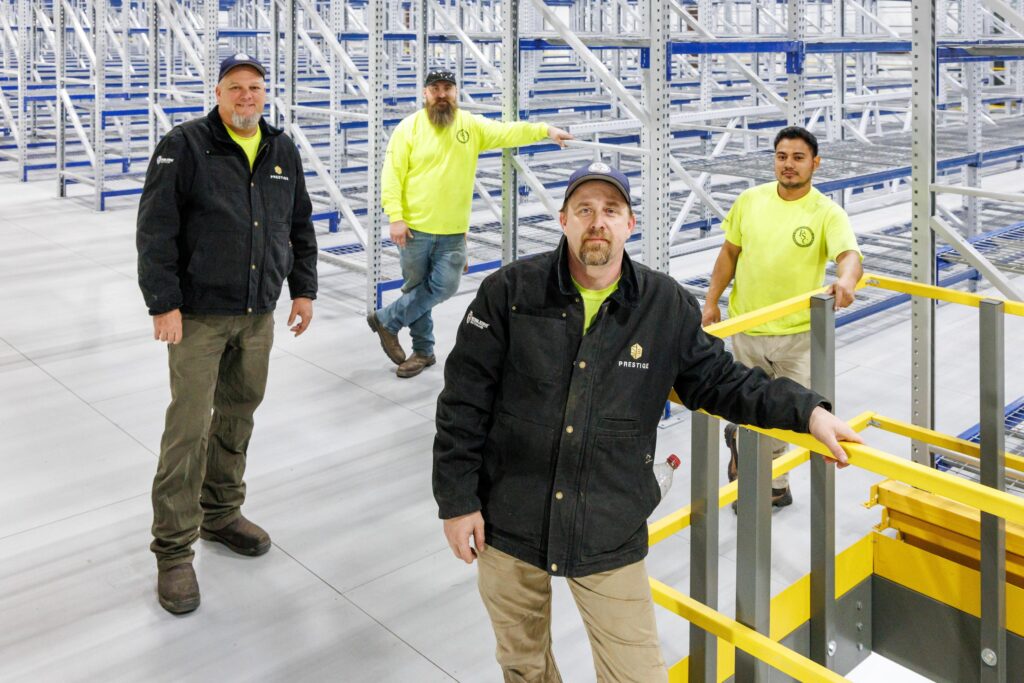
Since 1970, Prestige has established itself as a trusted partner for businesses looking to implement efficient and reliable pallet racking systems. Our process starts with a thorough understanding of your warehouse layout, inventory type, and workflow goals. We design dense pallet racking solutions that not only meet your current needs but also allow room to grow, ensuring long-term performance and flexibility.
From custom layout planning to professional installation, our team manages every step with precision and care. We prioritize safety, compliance, and efficiency, making sure your system is built to last. If you’re ready to improve access, streamline operations, and maximize your warehouse space, contact us today to speak with a racking expert or request a quote.
FAQ
Commonly Asked Questions
How much weight can dense pallet racking hold?
Weight capacity varies by rack type and configuration. If you already have a system, check its capacity labels for the rated load limits. If you’re planning a new system, we can help you choose one based on what you need to store.
Can dense racking be installed in any warehouse?
Dense pallet racking systems can be installed in many existing warehouses. These systems are ideal for businesses looking to increase pallet storage capacity without expanding their warehouse. We evaluate your facility’s storage requirements, inventory needs, and equipment to help determine the right dense racking solution for your operation.
What Is the Difference Between Dense Pallet Racking and Selective Pallet Racking?
The main difference between dense and selective pallet racking is storage capacity and accessibility. Dense pallet racking systems store pallets multiple positions deep, reducing aisle space and maximizing warehouse storage capacity. Selective pallet racking provides direct access to every pallet, making it ideal for facilities with a wide variety of SKUs. The right system depends on your inventory, available space, and daily operations.
Is dense racking easy to expand or reconfigure?
Dense pallet racking systems can be expanded or reconfigured as your warehouse storage needs change. Depending on the system type and available space, additional storage lanes, rack levels, or sections may be added to increase pallet capacity. Have a qualified rack design engineer review changes to the existing rack layout or beam levels before work begins. We can help plan for future expansion.